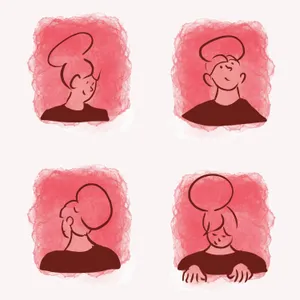
Why you act like different people—and what intelligence science adds
Based on the show notes, this episode looks at why people can feel split between different social roles and how to make peace with those inner contradictions. It also includes a listener Q&A with psychologist Scott Barry Kaufman on the science of intelligence.
This preview is based only on the published show notes, so think of it as a guide to what the episode promises rather than a recap of the conversation. The main thread centers on a familiar question: if you seem different with friends, co-workers, and family, which version is the “real” you? According to the notes, political scientist Eric Oliver explores why many people feel internally divided and how they might live more peacefully with those contradictions. If you’re drawn to episodes about identity, self-understanding, or the tension between social roles and private feelings, that setup may be especially appealing. The episode also shifts into a second segment with psychologist Scott Barry Kaufman, who answers listener questions about the science of intelligence. The notes don’t specify the exact questions, but they suggest a practical, accessible format rather than a purely abstract discussion. There’s also a related recommendation in the show notes: a separate video on the science of forgetting, framed as a reassuring look at memory lapses like losing keys or forgetting names. That appears to be extra context rather than the core topic of the episode itself. Why listen? This looks like a strong pick if you want a mix of big-picture reflection and applied psychology: one part about the many selves we present in daily life, and one part about how intelligence is understood scientifically.
About this episode
<p>You’re not the same person with your friends as you are with your co-workers or your kids. So who are you, really? This week, political scientist <a href="https://political-science.uchicago.edu/directory/Eric-Oliver" rel="noopener noreferrer">Eric Oliver</a> explores why we often feel divided within ourselves, and how we can learn to live more peacefully with those contradictions. Then, psychologist <a href="https://psychology.barnard.edu/profiles/scott-barry-kaufman" rel="noopener noreferrer">Scott Barry Kaufman</a> answers your questions on the science of intelligence.</p> <p><i>Should you worry about your memory? For many of us, forgetting a name or losing your keys feels like a small failure. But what if forgetting is actually one of the most important things your brain does? Check out our new video on the surprising (and reassuring!) </i><a href="https://www.youtube.com/watch?v=A8uokmk_MvE" rel="noopener noreferrer"><i>science of forgetting</i></a><i> to learn more.</i></p> <p><a href="https://unsplash.com/illustrations/six-different-facial-expressions-are-shown-in-this-image-Ca-d1mFBn5k" rel="noopener noreferrer"><i>Episode illustration by Eva Corbisier for Unsplash+</i></a><i>.</i></p><br/> <p>Hosted by Simplecast, an AdsWizz company. See <a href="https://pcm.adswizz.com">pcm.adswizz.com</a> for information about our collection and use of personal data for advertising.</p>