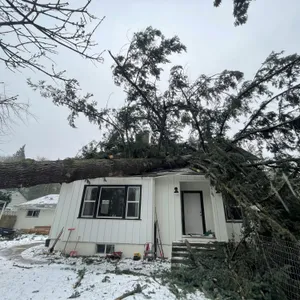
When your backyard tree becomes a legal battle over property rights
This preview, based only on the show notes, tees up a debate over whether cities can stop homeowners from cutting down trees on their own property. The episode appears to explore how tree ordinances collide with zoning power, environmental goals, and the meaning of ownership.
This episode preview suggests a classic Planet Money-style question with surprisingly big stakes: if you own the land, do you automatically get to decide what happens to the tree growing on it? Based on the notes, the episode looks at the spread of local tree-protection rules that can require permits, fees, or replacement planting before a tree can be removed. In some cases, cities may block removal altogether. The setup frames those policies as part of a broader public-interest case for trees, including air quality, flood control, public health, and cooling neighborhoods during hot weather. The tension here is what makes the episode sound interesting. On one side are local governments, which often have wide latitude over zoning and permitting. On the other are property owners who may see these rules as overreach, or even as raising constitutional questions. The notes also hint that the episode zooms out from trees to a bigger issue: what ownership really means when local law can shape how private property is used. If you like episodes about the gray area between economics, law, and everyday life, this one seems likely to deliver. It should especially appeal to listeners interested in housing, land use, environmental policy, or the practical limits of property rights. Just note: this is a guide based on the published show notes, not a recap of the audio itself.
About this episode
Can the government stop you from cutting down your own tree? In many towns and cities these days, removing a tree now requires a permit. You might have to pay a fee, or promise to plant replacement trees. But sometimes, the city won't let you cut down the tree at all, even a tree in your own backyard.<br/><br/>That's because trees are important for air quality, for flood control, and for public health. They help keep neighborhoods cool on hot days. But some think that tree protection laws have gone too far — that they might even be unconstitutional.<br/><br/>On today's episode, it's the latest showdown between property rights and local zoning laws. Typically, towns and cities enjoy a lot of power when it comes to zoning and permits. They can ban certain types of buildings. They can make you paint your house a certain color. But can they make it illegal to cut down a tree? And what does it mean to "own" a piece of property anyway?<br/><br/><em>Support:</em><br><ul class="rte2-style-ul" style="margin-top:0;margin-bottom:0;padding-inline-start:48px;"><li><a href="https://n.pr/3HlREPz"target="_blank" ><em>Planet Money+</em></a></li></ul><br/><br/><em>Read: </em><br/><br/><ul class="rte2-style-ul" style="margin-top:0;margin-bottom:0;padding-inline-start:48px;"><li><em>Our book: </em><a href="https://lnk.to/i3AukBdD"target="_blank" ><em>Planet Money: A Guide to the Economic Forces That Shape Your Life</em></a><em> </em></li><li><em>Our weekly longform </em><a href="https://n.pr/3zrFvUB"target="_blank" ><em>Planet Money newsletter</em></a></li><li><em>Our weekly </em><a href="https://www.npr.org/newsletter/indicator"target="_blank" ><em>Indicator round-up newsletter</em></a></li></ul><br/><br/><em>Follow: </em><br/><br/><ul class="rte2-style-ul" style="margin-top:0;margin-bottom:0;padding-inline-start:48px;"><li><a href="https://n.pr/3FqLuws"target="_blank" ><em>Instagram</em></a></li><li><a href="https://n.pr/3sGZdrq"target="_blank" ><em>TikTok</em></a></li><li><a href="https://lnk.to/iCVDaW3C"target="_blank" ><em>YouTube</em></a></li><li><a href="https://n.pr/3h92GwS"target="_blank" ><em>Facebook</em></a></li></ul><br><em>This episode of Planet Money was hosted by Jeff Guo and Amanda Aronczyk. It was produced by James Sneed and Emma Peaslee, edited by Jess Jiang, and fact-checked by Vito Emanuel. It was engineered by Robert Rodriguez and Cena Loffredo. Alex Goldmark is our executive producer.</em><br><br/><br/>See <a href="https://pcm.adswizz.com">pcm.adswizz.com</a> for information about our collection and use of personal data for sponsorship and to manage your podcast sponsorship preferences.<br/><br/><a href="https://www.npr.org/about-npr/179878450/privacy-policy">NPR Privacy Policy</a>