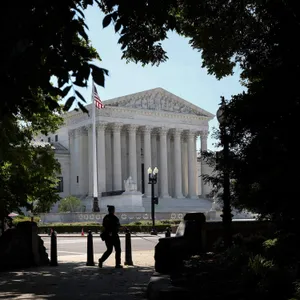
Why the Court became the nation’s most powerful referee
This preview-based episode looks at how the Supreme Court grew from the weakest branch into a dominant force in American life. With today’s term featuring major fights over citizenship, voting rights, presidential power, and civil rights, the show revisits the history behind the Court’s authority.
If you’re trying to decide whether to queue this one up, think of it as a historical guide to a very current institution. Based on the show notes, this episode connects the Supreme Court’s high-profile 2025–26 term to a bigger question: how did the Court become such a powerful arbiter in the first place? The notes suggest a mix of present-day relevance and long-view constitutional history. The current term is framed around major issues including birthright citizenship, voting rights, presidential powers, and civil rights, while the episode itself revisits the Court’s rise from what’s described as the weakest branch of government to the influential body it is today. It also notes that this episode originally aired in 2020, so listeners should expect a historical conversation being recirculated in light of today’s cases rather than a fresh case-by-case update. A big draw here is the guest lineup. The episode brings together legal and historical perspectives from Larry Kramer, former dean of Stanford Law School and author of *The People Themselves: Popular Constitutionalism and Judicial Review*; Rachel Shelden, a Penn State historian and author of *The Political Supreme Court*; and Lucas Powe Jr., professor of Law and Government at the University of Texas. This seems like a strong pick if you want context more than breaking-news analysis. If you’re interested in judicial power, constitutional interpretation, and the political history behind the Court’s modern role, the notes point to a thoughtful primer.
About this episode
The Supreme Court's 2025-26 term has been punctuated with some high-stakes cases: birthright citizenship, voting rights, presidential powers and consequential civil rights cases. Some of the most anticipated and significant cases have yet to be decided. As the justices make the final sprint to the end of the term in early July, we take stock of how the Supreme Court evolved from the weakest branch of government to the powerhouse arbiter it is today. This episode originally aired in 2020.<br/><br/><strong>Guests:</strong><br/><br/><strong>Larry Kramer, </strong>former dean of Stanford Law School and author of<em> The People Themselves: Popular Constitutionalism and Judicial Review</em><br/><br/><strong>Rachel Shelden, </strong>associate professor of History and director of the George and Ann Richards Civil War Era Center at Penn State University, and author of <em>The Political Supreme Court</em><br/><br/><strong>Lucas Powe Jr., </strong>professor of Law and Government at the University of Texas<br/><br/><em>Support shows like Throughline with NPR+. Sign up today at </em><a href="plus.npr.org"target="_blank" >plus.npr.org</a><em>.</em><br/><br/>See <a href="https://pcm.adswizz.com">pcm.adswizz.com</a> for information about our collection and use of personal data for sponsorship and to manage your podcast sponsorship preferences.<br/><br/><a href="https://www.npr.org/about-npr/179878450/privacy-policy">NPR Privacy Policy</a>